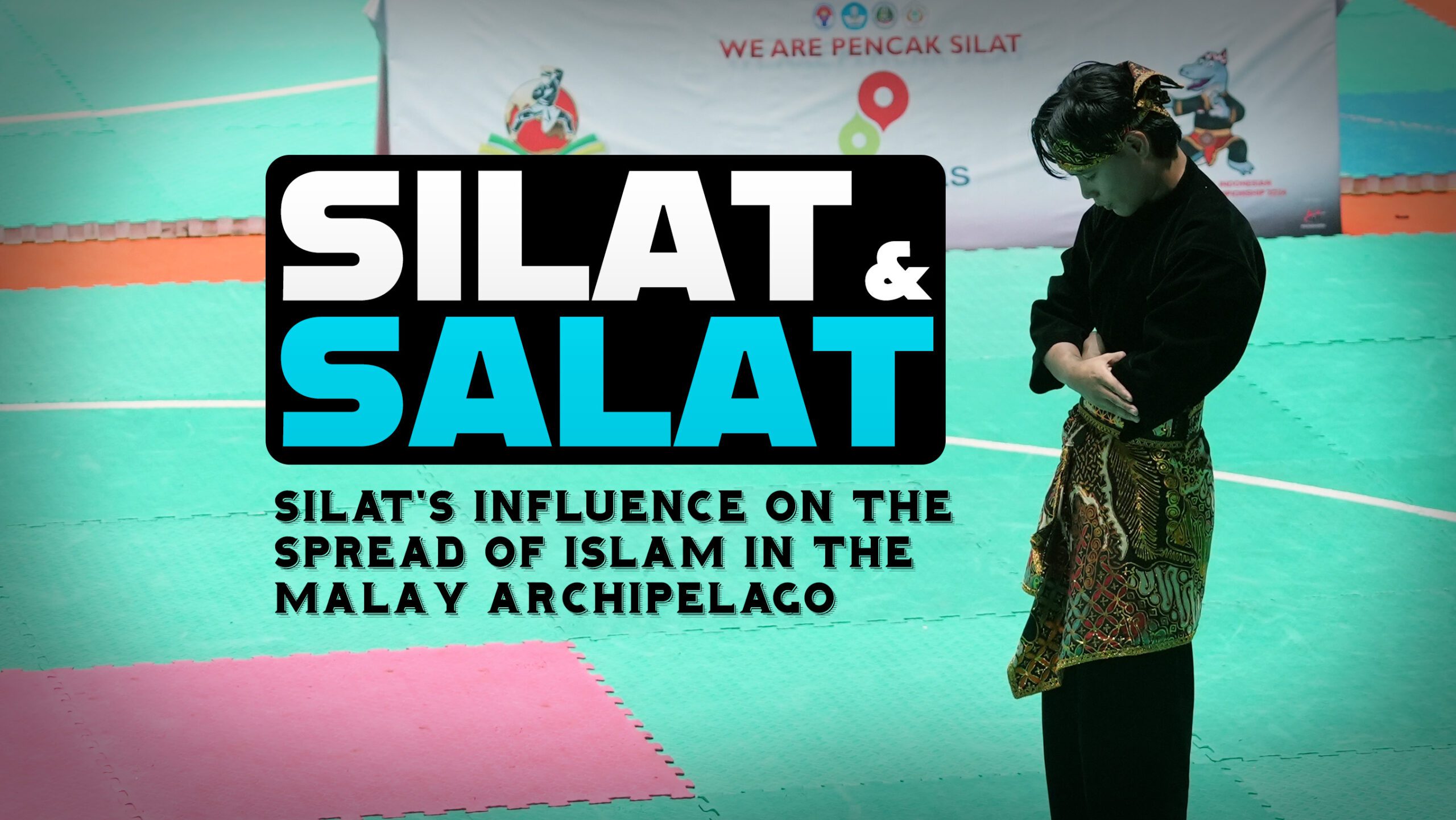
Silat & Salat
Silat’s Influence on the Spread of Islam in the Malay Archipelago
History often views the spread of religion through the lens of trade or conquest. In Southeast Asia, a unique synthesis occurred. Islamic Sufi scholars recognized the cultural importance of Silat and utilized it not just for physical defense, but as a framework for teaching spiritual discipline, morality, and community cohesion.
Chronology of Convergence
How the relationship between indigenous martial practices and Islamic teachings evolved over centuries.
Animism & Survival
Before the widespread arrival of Islam, early forms of Silat were heavily influenced by animism, Hinduism, and Buddhism. It was primarily a brutal means of survival, tribal warfare, and defending local territories. The spiritual aspects were tied to invoking nature spirits or ancestral powers for invulnerability.
The Arrival of Sufi Traders
As Muslim traders (often Sufis from Hadhramaut, India, and China) settled in coastal ports, they required protection for their goods. They engaged local Silat practitioners. In the process of cultural exchange, these traders introduced Islamic concepts, finding common ground in the mysticism of Sufism and the internal energy practices of Silat.
The Golden Age of Malacca
With the rise of the Malacca Sultanate, Islam became the state religion. Silat became institutionalized. The legendary warriors (like Hang Tuah) were depicted not just as fighters, but as devout Muslims loyal to the Sultan (the shadow of God on earth). Silat became the martial arm of the Islamic state, defending it against Portuguese and Dutch colonialists.
Formalization & The Tarekat
Silat schools became highly formalized, often deeply intertwined with Sufi orders (Tarekat). Physical training was preceded by prayers, ablution, and reciting Quranic verses. The ultimate goal of Silat shifted from killing the enemy to subduing one’s own ego (Nafs), making it a comprehensive physical and spiritual education system.
Mechanisms of Integration
The assimilation of Islam into the Malay world was not enforced by the sword, but rather taught alongside it. Three key pillars facilitated this unique cultural synthesis.
The Perguruan
Islamic boarding schools (Pondok/Pesantren) became the epicenter of community life. Scholars realized that to attract young men, they needed to offer what was culturally valued: martial prowess.
The Pendekar-Ulama
The emergence of the ‘Warrior-Scholar’. Many revered Islamic teachers (Ulama) were also masters of Silat (Pendekar). Their physical prowess was seen as a manifestation of spiritual purity.
Tasawwuf (Sufism)
Sufi mystics, instrumental in spreading Islam in the region, found parallels between their spiritual practices and the internal energy work of Silat.
Adab: The Protocol of the Pendekar
One of the most profound transformations brought by Islam to the archipelago’s martial culture was the introduction of Adab—Islamic etiquette, morality, and proper conduct. Before Islamization, the martial arts of the region were often bound by tribal loyalties, territorial disputes, and survival. With the integration of Islamic teachings, Silat was bound by a universal moral code.
A true Pendekar (master) was no longer just a fighter who could defeat opponents; they were expected to be a paragon of Akhlaq (virtue). The physical techniques of Silat were deemed dangerous unless the practitioner’s heart was first purified. Consequently, physical training was intentionally withheld until a student demonstrated patience (sabar), humility, and a deep understanding of Islamic tenets.
“The martial art is the vessel, but Islam is the water that fills it. A vessel without water is useless for quenching thirst, and water without a vessel spills into the earth.”
This code dictated rules of engagement. Initiating a fight out of anger was strictly forbidden, echoing the Islamic principle of defensive warfare. A Silat practitioner was taught to evade, deflect, and neutralize an opponent without causing lethal harm whenever possible. The ultimate victory was not destroying an enemy, but pacifying them and controlling one’s own ego—the true essence of the “Greater Jihad” taught by Sufi masters.
Da’wah Through Culture: The Wali Songo
The spread of Islam in regions like Java was heavily driven by the Wali Songo (the Nine Saints). Rather than eradicating local culture, these brilliant theologians utilized indigenous traditions—including wayang (shadow puppetry), gamelan music, and Silat—as vehicles for Da’wah (proselytizing).
By infusing Silat movements with Islamic prayers and naming techniques after prophets or companions of Muhammad, the Wali Songo made the religion accessible, localized, and deeply respected by the warrior classes and the common people alike. Silat gatherings became spaces for sermons, community bonding, and collective prayer.
The Symbolism of the Keris
The Keris (the traditional asymmetrical dagger) is deeply tied to Silat. With the advent of Islam, the Keris underwent a symbolic transformation.
- ✧ The Hilt: Often carved slightly bent, symbolizing a human bowing in prayer (Salat).
- ✧ The Pamor (Pattern): The distinct wavy patterns folded into the steel were reinterpreted to represent the infinite, interconnected nature of God’s creation, reflecting Tawhid (the Oneness of God).
- ✧ The Sheath: Represented the physical body, while the blade represented the eternal soul, teaching that martial power must always be kept restrained (sheathed) unless absolutely necessary.
